
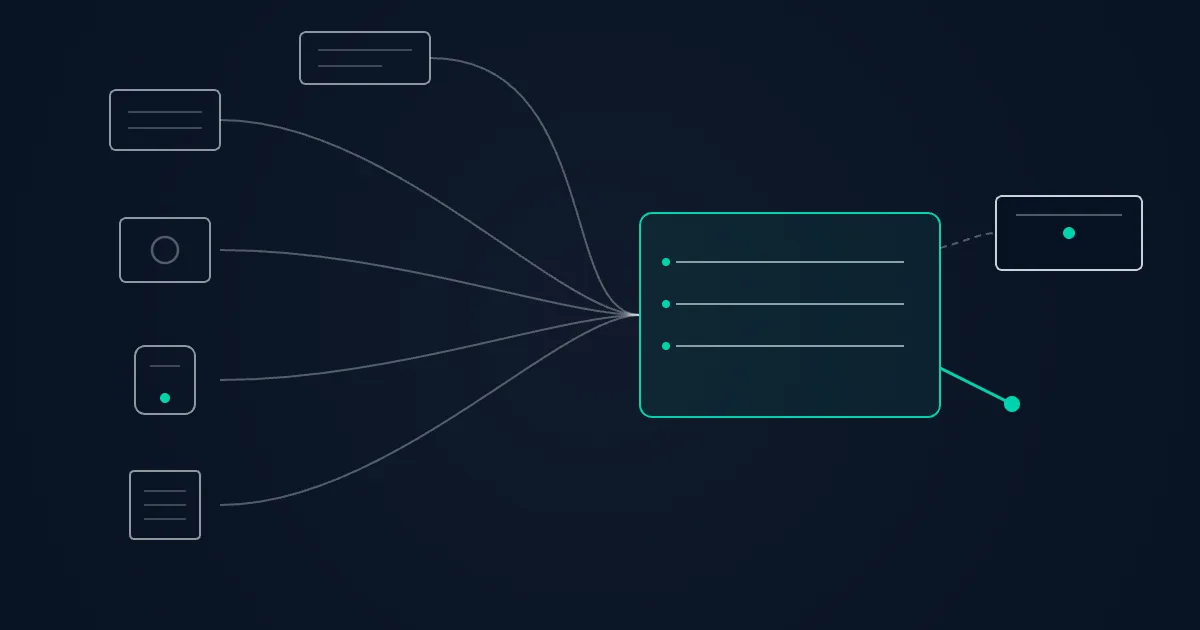
Digital CRO technology connects the systems, data, and workflows used to run a clinical trial. Its purpose is not to replace clinical expertise with a dashboard. It is to give sponsors, research organizations, sites, and operational teams a more consistent view of what is happening across participants, locations, vendors, documents, and study milestones.
The architecture matters because modern trials produce data through many channels. Site systems, laboratories, imaging providers, electronic outcomes, wearable devices, safety processes, public registries, and operational tools can all describe part of the same study. A digital operating model only works when those sources are integrated with clear ownership, validation, lineage, and exception handling.
Key Takeaways
A digital CRO platform is an integration and operations layer, not a single application.
Remote and decentralized data increases the need for source identity, time synchronization, validation, and traceability.
Real-time visibility is useful only when teams can see data freshness, quality, and unresolved exceptions.
Automation should route work and preserve evidence, not hide operational decisions.
Start with one measurable workflow and build reusable connectors, controls, and data models around it.
What Digital CRO Technology Actually Includes
The term can describe many tools, but the useful definition is architectural. Digital CRO technology is the connected layer that moves trial information from source systems into operational workflows and decision-ready views.
That layer commonly includes:
source-system connectors and secure file exchange;
application programming interfaces and event feeds;
a study, site, participant, and vendor identity model;
validation and reconciliation rules;
workflow automation and exception queues;
document and data lineage;
role-based operational views;
audit logging, monitoring, and recovery procedures.
Some capabilities may come from commercial platforms, some from sponsor systems, and some from custom software. The important question is not whether everything sits in one product. It is whether the complete flow is controlled and understandable.
More Data Sources Change the Engineering Problem
Traditional site-based processes already involve multiple systems. Remote visits, local providers, sensors, mobile applications, and in-home activities add more sources and more timing differences.
The U.S. Food and Drug Administration's final guidance on decentralized elements in clinical trials describes trial activities that can occur away from traditional sites, including telehealth visits, in-home visits, and visits with local health care providers. Its final guidance on digital health technologies for remote data acquisition also emphasizes fit-for-purpose technology, verification, validation, data management, and risk considerations.
For engineering teams, that translates into concrete questions:
Which device or application produced the value?
Which participant, visit, and protocol activity does it belong to?
Was the device time synchronized?
Was data received completely and on time?
Did an update replace an earlier value?
Was the source operating within its expected conditions?
Who reviews an exception, and where is that decision recorded?
A platform that displays a value without this context may look integrated while remaining operationally fragile.
Build a Shared Trial Identity Model
Every connector brings its own identifiers. A site may be known by one code in the study system, another in a laboratory feed, and a third in a vendor portal. Participant identifiers may also be transformed or scoped differently across systems.
The integration layer needs a controlled mapping between these identifiers. The mapping should be versioned, reviewed, and available to the workflows that depend on it. It should never rely on a spreadsheet known only to one coordinator.
The same principle applies to visits, forms, samples, devices, and documents. If the platform cannot tell that two records refer to the same operational object, it cannot reconcile them reliably.
Treat Validation and Exceptions as Product Features
Data quality is not a cleanup task at the end of the pipeline. It is part of daily trial operations.
A useful platform validates data as it arrives and separates three outcomes:
accepted data that meets the expected contract;
data that can be accepted with a visible warning;
data that must be quarantined for review.
Each exception needs context, severity, ownership, status, and a record of the resolution. Repeated exceptions should become observable trends so teams can distinguish a one-time feed problem from a systemic issue at a site or vendor.
This is where automation can reduce manual coordination. It can route the exception, attach the relevant source evidence, notify the owner, and track the response. It should not silently repair a value when the correction requires clinical or operational judgment.
Make Operational Visibility Honest
Teams often ask for a real-time dashboard. Before building it, define what real time means for each source.
A laboratory result may arrive on a schedule. A device stream may update frequently. A site document may be uploaded only after review. Showing all three in one interface without freshness indicators can create false confidence.
Every operational view should expose:
the latest successful source update;
expected update frequency;
validation status;
unresolved exceptions;
lineage to the source record;
definitions for calculated metrics.
The dashboard then becomes an interface to a controlled data process, not a decorative layer over unknown data.
Use Automation Where the Decision Rule Is Clear
Good candidates for automation include file receipt checks, schema validation, identifier matching, duplicate detection, task routing, reminder generation, and preparation of standard operational views.
Human review remains important when context changes the decision. Examples include resolving conflicting source records, interpreting a protocol-specific exception, assessing whether missing data affects an operational decision, or approving a correction.
The design principle is simple: automate repeatable movement and checking, then make judgment visible and accountable.
Design for Change Across Studies and Sponsors
A digital CRO platform must support variation without becoming a separate codebase for every study.
Keep shared capabilities stable:
authentication and authorization;
connector framework;
ingestion and validation patterns;
event and audit logging;
monitoring and alerting;
deployment and environment controls.
Represent study-specific behavior as governed configuration where possible:
source mappings;
expected schedules;
validation thresholds;
workflow routing;
metric definitions;
document requirements.
Configuration still needs version control, testing, approval, and rollback. Moving a rule out of code does not make the rule harmless.
A Practical Delivery Sequence
Begin with one workflow that creates visible operational delay. Good examples include reconciling site and laboratory status, monitoring data arrival from a remote source, or preparing a cross-system study status view.
Map the source systems, identifiers, update times, manual handoffs, exception types, and owners. Define the target data contract and the acceptance rules. Build one end-to-end path with monitoring and recovery. Measure the baseline and the result using operational metrics such as preparation time, exception age, failed updates, duplicate work, or time to a trusted status view.
Only then generalize the connector and workflow patterns for additional studies. This approach produces a reusable platform from working increments instead of a large design that has not met real trial conditions.
DataDrill's life sciences software development service covers the product, integration, and delivery layers behind digital clinical platforms. For the data exchange layer, read FHIR for developers. For global program complexity, read multi-region clinical trial data integration.
Final Thought
The future of a digital CRO is not defined by how many tools it buys. It is defined by whether its systems can create a timely, traceable, and operationally useful view of a trial. That requires product design, data engineering, cloud operations, and clinical workflows to be built as one connected system.